
Introduction
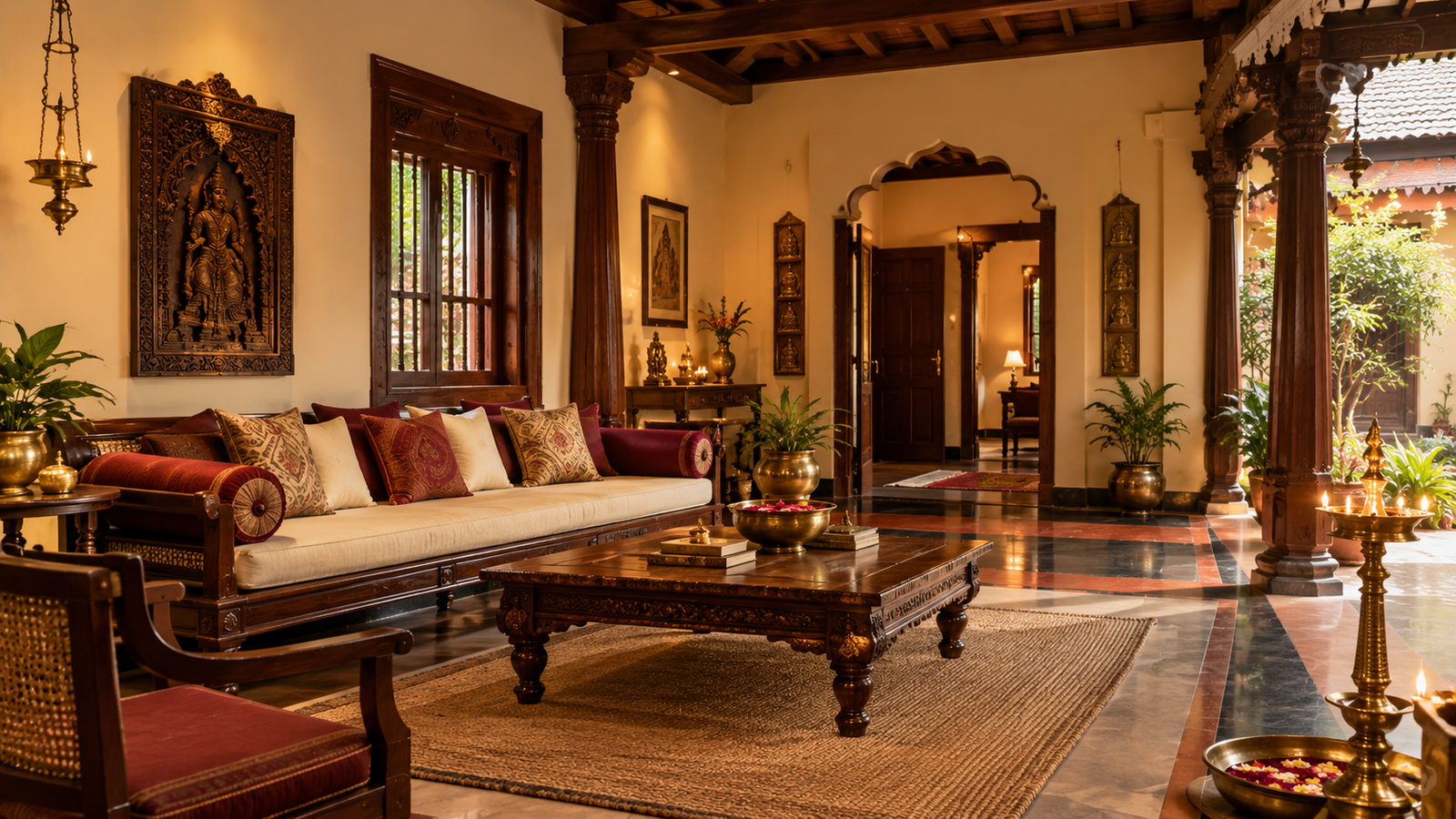
Traditional Indian interior design brings together India’s rich cultural heritage, regional craftsmanship and practical approach to living. From carved wooden furniture and brass accents to natural stone, handcrafted textiles, earthy colours and traditional patterns, this style can give a home a warm and distinctive personality.
Indian homes have historically been influenced by local climate, available materials, regional traditions and ways of living. Today, these ideas can be adapted to modern homes without making the entire space look old-fashioned.
For example, Architectural Digest India’s feature on homes reconnecting with regional design traditions shows how natural stone, teak wood, traditional jaali, regional tiles and other vernacular elements can be reinterpreted for modern lifestyles.
The key is to use traditional elements thoughtfully. Traditional Indian interior design works best when cultural details, comfort and functionality are balanced rather than simply filling a room with decorative objects.
What Is Traditional Indian Interior Design?
Traditional Indian interior design is an approach to decorating a home that takes inspiration from India’s regional architecture, craftsmanship, materials, colours, textiles and cultural traditions.
India has an incredibly diverse design heritage, so there is no single look that defines traditional Indian interiors.
A Rajasthani-inspired space may feature carved wood, rich textiles and earthy colours, while a Kerala-inspired home may use natural wood, courtyards, verandahs and traditional architectural details.
Common elements include:
- Natural wood
- Brass and other metals
- Handcrafted furniture
- Indian textiles
- Traditional patterns
- Natural stone
- Terracotta
- Warm and earthy colours
- Handcrafted décor
- Plants and natural elements
- Courtyard-inspired layouts
The result can be warm, personal and strongly connected to Indian culture.
7 Key Elements of Traditional Indian Interior Design
1. Use Natural and Traditional Materials
Materials are an important part of traditional Indian interior design.
Wood, stone, terracotta, bamboo, lime plaster and natural fabrics can introduce texture and character while creating a stronger connection with Indian architectural traditions.
Different regions of India have historically used materials according to their climate, geography and availability. For example, Architectural Digest India’s recent feature on vernacular materials highlights materials such as terracotta, lime plaster, Kota stone and handmade tiles in Indian homes.
You don’t need to use every traditional material in one room.
A wooden cabinet, stone floor, terracotta accessory or handcrafted wall feature may be enough to establish an Indian character.
2. Choose Warm Indian Colours
Colour can immediately change the atmosphere of a room.
Traditional Indian interiors can work beautifully with warm and expressive shades such as:
- Terracotta
- Mustard
- Maroon
- Saffron
- Deep red
- Rust
- Olive green
- Indigo
- Beige
- Cream
You don’t need to use several strong colours together.
For example, a neutral living room can be enhanced with a mustard cushion, terracotta artwork, deep green chair or traditional patterned rug.
Architectural Digest India’s collection of colourful Indian homes demonstrates how colour, traditional materials and textiles can create distinctive Indian interiors.
The important thing is balance. Rich colours become more effective when they are surrounded by calmer shades.
3. Add Handcrafted Wooden Furniture
Wooden furniture is one of the easiest ways to introduce traditional Indian character into a home.
You can consider:
- Carved wooden cabinets
- Teak furniture
- Wooden swings
- Traditional benches
- Carved side tables
- Wooden partitions
- Traditional storage units
However, avoid filling the entire room with heavily carved furniture.
One or two statement pieces can be much more effective.
For example, a contemporary living room can feature a simple sofa combined with a traditional wooden centre table or carved cabinet. This creates a beautiful balance between traditional craftsmanship and modern comfort.
This approach is also useful if you want to combine Traditional Indian Interior Design with another style such as Contemporary Interior Design.
4. Use Indian Textiles and Patterns
Textiles can introduce colour, softness and cultural character without requiring major structural changes.
Consider using:
- Handloom fabrics
- Cotton cushions
- Silk accents
- Block prints
- Ikat
- Kalamkari-inspired patterns
- Dhurris
- Traditional rugs
- Embroidered fabrics
These can be introduced through curtains, cushions, rugs, throws, bedcovers or upholstery.
Textiles are particularly useful because they can be changed relatively easily. You can therefore experiment with Indian patterns without permanently changing your interior.
A neutral room with an Indian handloom rug or patterned cushions can immediately feel warmer and more distinctive.
5. Introduce Brass and Traditional Metal Accents
Brass has a strong connection with Indian decorative traditions and can add warmth to an interior.
You can use brass through:
- Diyas
- Lamps
- Vases
- Bowls
- Decorative trays
- Sculptural objects
- Cabinet handles
- Small accessories
The key is moderation.
Instead of placing brass objects throughout every part of the room, select a few pieces and repeat the material naturally.
For example, a brass pendant light can be paired with a smaller brass vase or decorative bowl.
This creates consistency without making the room look overly decorated.
6. Bring in Traditional Patterns and Craft
Patterns can give traditional Indian interior design a strong sense of identity.
You can take inspiration from:
- Jaali patterns
- Rangoli
- Floral motifs
- Geometric designs
- Block printing
- Traditional tile patterns
- Regional crafts
Jaali is especially useful because it can be both decorative and functional.
Traditional perforated screens can filter light and create interesting patterns of shadow. Modern Indian homes continue to reinterpret this idea through partitions, screens and architectural details.
For example, Architectural Digest India’s feature on Indian homes that reconnect with regional traditions shows contemporary applications of jaali, carved teak and regional craftsmanship.
You can introduce the concept through a wooden partition, cabinet detail, room divider or decorative wall panel.
7. Connect the Interior With Nature
Traditional Indian homes have often maintained a strong relationship between indoor and outdoor spaces.
Courtyards, verandahs, natural light, plants and open spaces can all contribute to this connection.
Even if your home doesn’t have a traditional courtyard, you can create a similar feeling with:
- Indoor plants
- Large windows
- Natural wood
- Stone surfaces
- Balconies
- Natural fabrics
- Indoor-outdoor seating
Courtyards have historically served practical as well as aesthetic purposes in Indian homes.
Architectural Digest India’s feature on Indian courtyards and verandahs explains how these transitional spaces can help connect interiors and exteriors while responding to India’s climate.
Traditional Indian Interior Design Ideas for Different Rooms
Traditional Indian Living Room
The living room is one of the best places to introduce traditional Indian interior design.
Start with comfortable seating in neutral or earthy colours. Then add a traditional wooden table, handcrafted décor, brass lighting, Indian textiles and a patterned rug.
A carved wooden partition can also become an attractive focal point while separating two areas.
Avoid using too many traditional elements at the same time. A combination of contemporary furniture and Indian craftsmanship often creates a more sophisticated result.
If you prefer a cleaner approach, explore our guide to Minimalist Interior Design for ideas on keeping the space uncluttered.
Traditional Indian Bedroom
A traditional Indian bedroom should feel warm, comfortable and peaceful.
Wooden furniture, handloom bedding, patterned cushions and warm lighting can create a welcoming atmosphere.
You can introduce a traditional element through:
- A carved headboard
- Wooden bedside tables
- Indian textiles
- Brass lamps
- Traditional artwork
Keep the colour palette controlled so that the room remains relaxing rather than visually overwhelming.
Traditional Indian Kitchen
A completely traditional kitchen may not be practical for every modern household, but you can introduce Indian character through materials and smaller details.
Consider:
- Wooden cabinets
- Brass handles
- Patterned tiles
- Terracotta accents
- Open wooden shelves
- Traditional containers
At the same time, modern storage and appliances should remain easily accessible.
A good kitchen should look beautiful while remaining practical for everyday cooking.
Traditional Indian Dining Area
The dining area is an excellent place to combine traditional craftsmanship with modern functionality.
A solid wooden dining table can become the main focal point.
Pair it with comfortable chairs, a brass pendant light and a handcrafted centrepiece.
Traditional artwork, a patterned rug or decorative wall feature can add additional character.
Make sure there is sufficient space around the dining table so that people can move comfortably.
How to Combine Traditional Indian Design With Modern Interiors
You don’t need to make every part of your home look traditional.
In fact, combining traditional details with modern furniture can often create a more sophisticated result.
For example:
Modern sofa + traditional wooden table + brass lamp + Indian textile
This creates contrast while allowing both styles to work together.
Recent examples featured by Architectural Digest India show how Indian homes combine old-world elements with modern layouts. Traditional pillars, carved woodwork, heritage motifs and regional materials can work alongside contemporary furniture and modern functionality.
If you want to explore a more current approach, read our guide to Contemporary Interior Design.
For homeowners who prefer a more luxurious approach, our Luxury Interior Design guide can also provide ideas for combining premium materials with traditional Indian elements.
How to Make Traditional Indian Interior Design Feel Elegant
Traditional design can become visually heavy when too many colours, patterns and decorative objects are used together.
The following principles can help maintain an elegant appearance.
Keep Some Areas Simple
Allow certain walls, shelves and surfaces to remain uncluttered.
Empty space can actually make traditional furniture and artwork stand out more.
Use Statement Pieces
Instead of using many small decorative objects, select a few pieces with strong visual character.
Balance Rich Colours With Neutrals
If you use deep red, mustard or indigo, balance these shades with cream, beige, white or natural wood.
Repeat Materials
If brass is used in your lighting, consider repeating it through a smaller accessory elsewhere.
Mix Old and New
Combining contemporary furniture with traditional craftsmanship can make the interior feel relevant to modern living.
Common Traditional Indian Interior Design Mistakes to Avoid
Using Too Many Colours
Indian interiors can certainly be colourful, but every room doesn’t need several strong shades.
Overusing Carved Furniture
One beautiful carved piece can be more effective than filling the entire room with heavily decorated furniture.
Mixing Too Many Patterns
If your rug has a strong pattern, consider using simpler cushions and curtains.
Ignoring Functionality
Traditional appearance should never make everyday activities difficult.
Using Too Many Decorative Objects
Every shelf doesn’t need to be filled.
Select meaningful pieces and give them enough space to stand out.
Making Everything Look Old
Traditional Indian design doesn’t mean recreating a historical house.
Traditional elements can be adapted for modern lifestyles, technology and comfort.
How to Create Traditional Indian Interior Design on a Budget
You don’t need a complete renovation to introduce Indian character into your home.
Start With Textiles
Replace cushions, rugs or curtains with Indian-inspired patterns and handloom fabrics.
Add Brass Décor
A few brass lamps, bowls or decorative objects can create an immediate change.
Introduce Plants
Plants can bring natural colour and make a traditional space feel fresher.
Choose One Wooden Statement Piece
A traditional wooden cabinet, bench or table can become the main focal point of a room.
Use Traditional Artwork
Indian paintings, prints or handcrafted wall décor can introduce cultural character without requiring major renovation.
Change the Lighting
Warm pendant lights, floor lamps and decorative fixtures can dramatically change the atmosphere.
Frequently Asked Questions
What is traditional Indian interior design?
Traditional Indian interior design is inspired by India’s regional architecture, craftsmanship, materials, colours, textiles and cultural traditions. Common elements include natural wood, brass, Indian textiles, stone, traditional patterns and handcrafted décor.
What colours are commonly used in traditional Indian interiors?
Traditional Indian interiors can use warm shades such as terracotta, mustard, maroon, saffron, rust, deep red and olive green. These colours can be balanced with cream, beige, white and natural wood.
How can I add Indian elements to a modern home?
You can combine modern furniture with traditional Indian elements such as handcrafted wooden furniture, brass lighting, Indian textiles, traditional artwork, natural materials and patterned décor. This creates a balanced interior without making the home feel outdated.
Conclusion
Traditional Indian interior design is about more than simply using traditional colours or decorative objects. It brings together craftsmanship, natural materials, cultural details and practical living in a way that makes a home feel personal and welcoming.
Wooden furniture, brass accents, Indian textiles, natural stone, traditional patterns, plants and handcrafted décor can all add character to a home. You don’t need to use every element. Selecting a few meaningful details and combining them with modern functionality can create a much more refined result.
If you are exploring different styles for your home, visit our Interior Design Styles guide to compare traditional Indian design with Modern Interior Design, Minimalist Interior Design, Luxury Interior Design and Contemporary Interior Design.
With thoughtful planning and the right balance of materials, colours, craftsmanship and décor, traditional Indian interior design can create a home that feels warm, culturally connected, beautiful and timeless.