
Home Office Interior Design Idea: 10 Creative Ways to Build a Productive Workspace
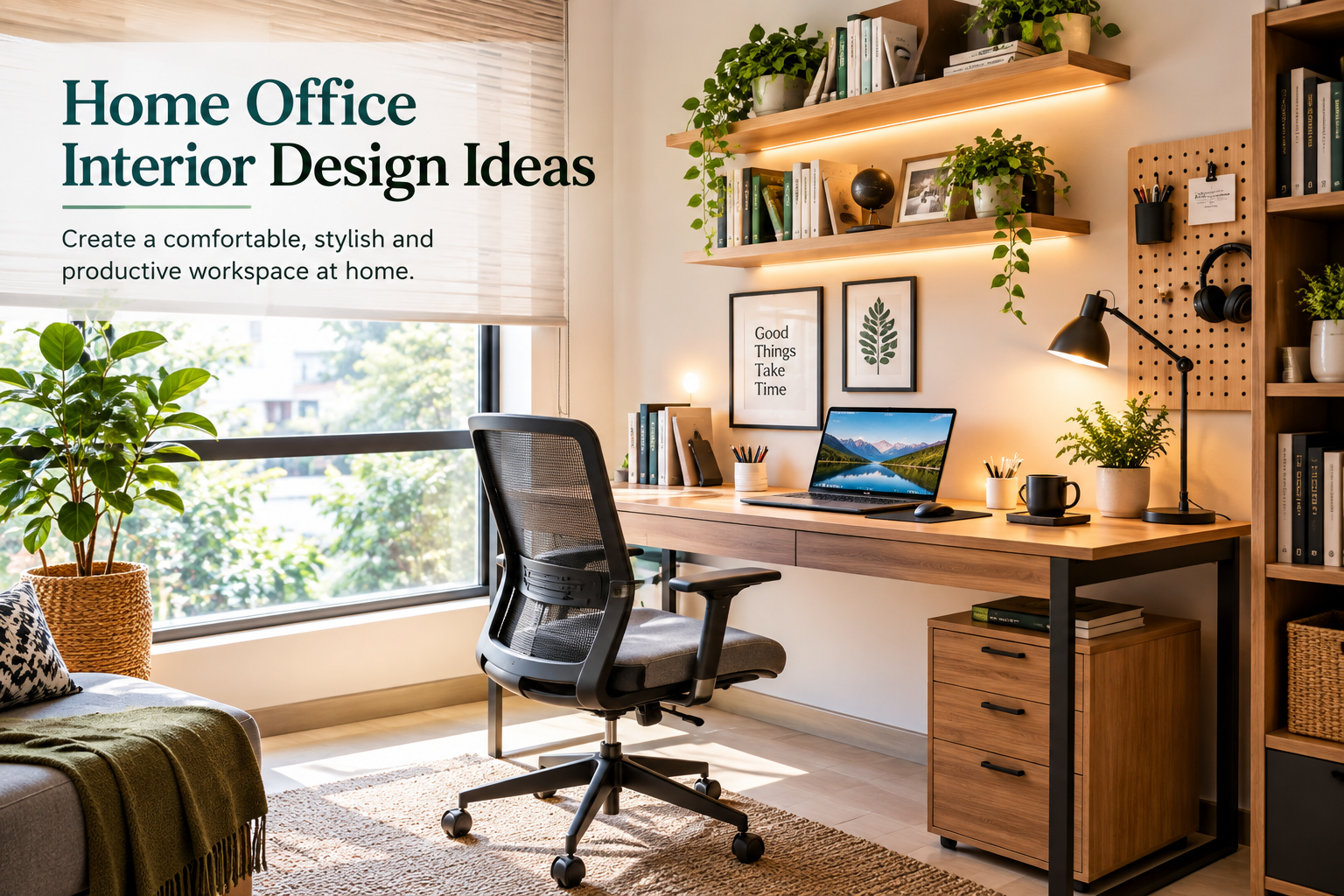
Working from home becomes much easier when your workspace is comfortable, organized, and designed around the way you actually work. The right home office interior design idea can help you turn an unused corner, bedroom section, or dedicated room into a practical workspace.
A good home office is not only about choosing an attractive desk or chair. Layout, lighting, storage, colours, furniture, and cable management all affect how the space looks and functions.
Whether you have a dedicated office or only a small corner available, these home office interior design ideas can help you create a workspace that feels professional while still matching your home’s interior.
How to Plan a Functional Home OfficeBefore buying furniture or choosing decorative elements, start by understanding the available space.
A successful home office interior design idea should begin with the room’s size, natural light, electrical points, storage requirements, and your daily work habits.
Choose the Right Location
A dedicated room is ideal, but it is not essential.
A quiet corner of a bedroom, living room, hallway, or unused area under a staircase can become a functional workspace.
If possible, choose a location with natural light and limited household distractions.
For smaller homes, a wall-mounted desk can provide a practical workstation without taking up too much floor space.
Plan Your Desk and Chair Placement
The desk should have enough surface area for your computer, keyboard, documents, and other frequently used items.
The chair should provide appropriate support and allow you to sit comfortably while working.
According to the U.S. Occupational Safety and Health Administration (OSHA), workstation components should be arranged to support neutral body positions and reduce awkward postures.
A thoughtful home office interior design idea therefore needs to combine appearance with practical workstation planning.
Think About Storage Before Decorating
Storage should be planned before adding decorative accessories.
Consider:
- Wall-mounted shelves
- Closed cabinets
- Drawer units
- Floating shelves
- File storage
- Desk organizers
Keeping frequently used items within easy reach can make the workspace easier to maintain.
Home Office Interior Design Ideas for Different Spaces
Not every home provides a separate office room. Fortunately, a good home office interior design idea can be adapted to almost any space.
Dedicated Home Office
If you have a spare room, you can create a complete home office with a full-size desk, storage cabinets, bookshelves, comfortable seating, and layered lighting.
Use the room’s layout to create separate zones for computer work, reading, meetings, and storage.
Small Corner Workspace
A small corner can become an efficient office with the right furniture.
Choose a compact desk, slim chair, vertical storage, and wall-mounted accessories.
Instead of filling the floor with furniture, use the walls for shelves and organizers.
This approach makes a small home office interior design idea feel more open and organized.
Bedroom Workspace
If your bedroom is also your workspace, create visual separation between the two areas.
A compact desk can sit beside a window or against an unused wall. A small shelf or open divider can help distinguish the working area from the sleeping area.
Choose colours and materials that complement the existing bedroom rather than making the office look like a completely separate room.
Living Room Workspace
For apartments, a living room may need to serve multiple purposes.
A slim desk behind a sofa, a floating desk, or a small corner workstation can provide enough space for everyday work.
Storage baskets and closed cabinets can help hide office supplies when the workspace is not being used.
Key Elements of a Good Home Office Interior Design Idea
The best workspace designs combine several elements instead of relying on one piece of furniture.
1. Choose a Practical Desk
Your desk should match the size of the room and your work requirements.
If you primarily use a laptop, a compact desk may be enough. If you use multiple monitors, documents, or design equipment, you may need a larger surface.
OSHA guidance also emphasizes sufficient desk space and appropriate placement of frequently used equipment.
2. Use Comfortable Furniture
A stylish chair is useful, but comfort and adjustability should come first.
The monitor, keyboard, mouse, desk, and chair should work together rather than being selected independently.
A good home office interior design idea considers the complete workstation instead of focusing only on appearance.
3. Make Lighting Part of the Design
Lighting can completely change the appearance of a home office.
Use natural daylight where possible and combine it with artificial lighting for evening work.
A desk lamp can provide focused light for reading and writing, while ambient lighting can make the room feel warmer.
OSHA recommends arranging lighting to reduce glare and positioning windows and lights so they do not create distracting reflections on the screen.
4. Choose a Calm Colour Scheme
Neutral colours such as white, beige, grey, warm wood tones, and soft green can create a calm visual environment.
You can also introduce a stronger accent colour through a feature wall, chair, artwork, rug, or accessories.
The goal is to create a colour scheme that works with the rest of your home’s interior.
5. Use Vertical Storage
When floor space is limited, look upward.
Floating shelves, tall cabinets, pegboards, and wall organizers can provide useful storage without occupying much floor area.
This is particularly useful for a small home office interior design idea where every square foot matters.
6. Keep the Background Visually Clean
If you frequently attend video meetings, think about what appears behind your chair.
A simple bookshelf, artwork, plant, textured wall, or clean cabinet can create an attractive background.
Avoid placing too many objects behind the desk because visual clutter can make the space look untidy.
7. Hide Cable Clutter
Visible cables can make even an expensive workspace look unfinished.
Use cable clips, cable sleeves, under-desk cable trays, and organized charging points.
A clean cable setup should be considered during the planning stage rather than added as an afterthought.
10 Home Office Interior Design Ideas to Try
If you are looking for a home office interior design idea that is both practical and attractive, consider these options:
1. Create a Minimalist Workspace
Use a simple desk, comfortable chair, limited accessories, and concealed storage.
2. Add a Feature Wall
Use paint, wallpaper, wood panels, or artwork to give the office a defined visual identity.
3. Use Floating Shelves
Floating shelves provide storage while keeping the floor area open.
4. Place the Desk Near Natural Light
A window can make the workspace feel brighter and more welcoming. Position the screen carefully to reduce glare.
5. Add Indoor Plants
Plants can introduce colour and natural texture to an otherwise functional room.
6. Create a Built-In Workspace
A built-in desk and storage unit can make excellent use of awkward walls or unused corners.
7. Use a Fold-Down Desk
A fold-down desk can be useful when the room has multiple purposes and the workspace needs to disappear after work.
8. Choose Multifunctional Furniture
A desk with drawers or integrated shelves can reduce the amount of additional furniture required.
9. Use Warm Layered Lighting
Combine general room lighting with task lighting to create a more comfortable atmosphere.
10. Add Personal Décor Carefully
Artwork, books, plants, photographs, and accessories can make the workspace feel personal without overwhelming it.
How to Make a Small Home Office Feel Bigger
A small workspace does not have to feel cramped.
One effective home office interior design idea is to keep the floor visually open.
Choose furniture with a compact footprint and use wall-mounted storage wherever possible.
Light colours can also make the room feel more spacious. Mirrors can be useful in some layouts because they reflect light and create a greater sense of visual depth.
Avoid filling every available surface with accessories.
A smaller workspace often looks better when storage is organized and decorative elements are intentionally limited.
How to Improve Home Office Lighting
Lighting deserves special attention because computer screens can create glare when positioned incorrectly.
Try placing the desk so that windows are not directly behind or directly facing the screen.
Use curtains or blinds to control strong daylight when necessary.
A desk lamp can provide additional illumination for paperwork, while softer ambient lighting can prevent the room from feeling overly harsh.
OSHA’s workstation guidance specifically discusses glare, task lighting, window placement, and balanced illumination for computer work.
For more detailed workstation guidance, you can also refer to the OSHA Computer Workstations guide.
Common Home Office Design Mistakes to Avoid
Even a beautiful home office interior design idea can become impractical if the basic layout is ignored.
Choosing Furniture That Is Too Large
Oversized desks and cabinets can make a small room feel crowded.
Ignoring Cable Management
Loose cables quickly make the workspace look messy.
Using Only Decorative Lighting
A workspace needs appropriate task lighting as well as decorative lighting.
Forgetting Storage
Without enough storage, documents and accessories can quickly take over the desk.
Blocking Natural Light
Large furniture should not unnecessarily block windows or make the room feel dark.
Prioritizing Looks Over Comfort
A visually attractive office still needs furniture and equipment arranged for comfortable everyday use.
FAQs About Home Office Interior Design Ideas
What is a good home office interior design idea for a small room?
Use a compact desk, vertical storage, light colours, and furniture with a small footprint. A floating or fold-down desk can also save valuable floor space.
How can I make my home office look professional?
Use a coordinated colour palette, organized storage, good lighting, clean cable management, and a simple background.
Where should I place my home office desk?
Choose a location with enough working space and, where possible, access to natural light. Avoid positioning the monitor where strong light creates glare.
How do I design a home office in my bedroom?
Use a compact desk and visually separate the workspace from the sleeping area. Matching the colours and materials with the bedroom can help the two zones feel cohesive.
What should I prioritize in a home office?
Prioritize layout, comfortable furniture, lighting, storage, electrical access, and organization before adding decorative elements.
Conclusion
A successful home workspace should be comfortable, organized, functional, and visually connected to the rest of your home. The right home office interior design idea does not require a large room or an expensive renovation.
Start with the available space, choose furniture that fits the room, plan storage carefully, control lighting and glare, and add décor that reflects your style.
Whether you are designing a dedicated office, a bedroom workspace, or a compact corner, thoughtful home office interior design ideas can help you create a space that works beautifully for everyday life.